The Lie of the Land
by Amanda Craig
Wednesday, September 2, 2026
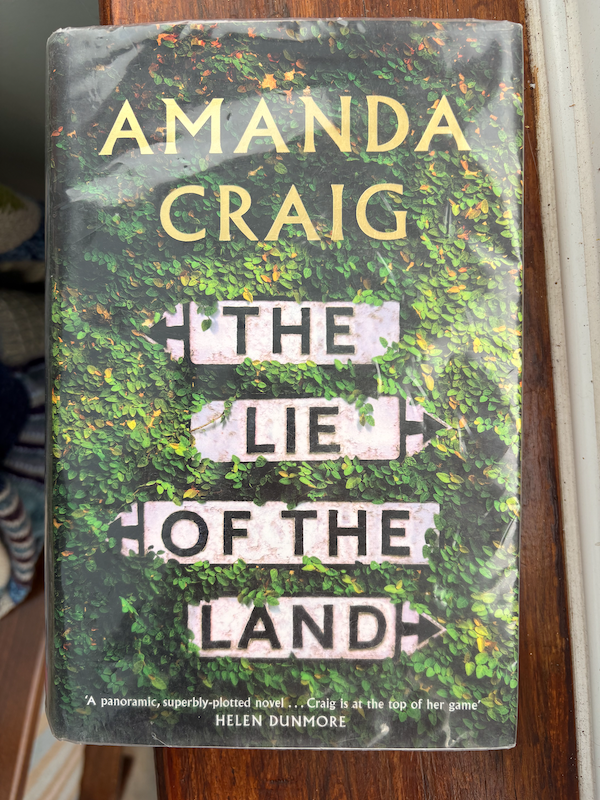
I picked up this book mostly because there was a puff from Alison Lurie on the back cover. I’ve enjoyed Lurie’s books and thought a contemporary author with the same kind of atmosphere and feeling for the time in which the book was written would be a good read. This book was published in 2017, which despite feeling like yesterday to me is just long enough ago that it can feel slightly dated but not long enough ago to be nostalgic about. In 2026, despite the intermediate pandemic, we’re very much still in the same arc of global history as we were then.
In the beginning I was really pretty disappointed. The setup seemed weak and poorly constructed. Quentin has been unfaithful to Lottie, they are both recently redundant, and find themselves unable to sell their London home and make a clean break of the divorce. Lottie finds a too-cheap-to-be-true farmhouse to rent in Devon and they rent the London house out and the family moves out to the country, with Quentin tagging along. I just had so many ‘yeah but’ moments with this arrangement that I could easily have thrown the book across the room in the first few chapters. But it seemed well written and I thought the characters might be better than their introduction so I kept reading.
It’s definitely the kind of writing that tries to encapsulate the shifting layers of society within its story. And despite occasional clunkiness mostly I liked that. The comparison to Lurie is sometimes justified. But the story also tried to get into suspense or mystery novel territory with several different threads and I felt those parts were a lot weaker than the rest of the book and weren’t really what I was reading on for. I sometimes wondered if some of the subplots were supposed to be black comedy and it just wasn’t landing with me, I’m still not quite sure whether they were.
I wasn’t entirely surprised to discover at the end that various characters - including Lottie and Quentin - had been reused from Craig’s earlier books. That perhaps explains why the beginning of the book felt a bit bizarre to me. Although I certainly found it a very inconsistent book to read I still think I’m reasonably interested in reading those earlier works. I suspect this’ll seem like a better book in thirty years time than it does today; it definitely felt like it was written for the record.